



Where Is My Change?
A nostalgic game about childhood and running errands. Mummy hands you money and a list, with one instruction. Bring back my complete change. An experiment in turning the folklore every Nigerian child grew up with into play.
Where Is My Change?
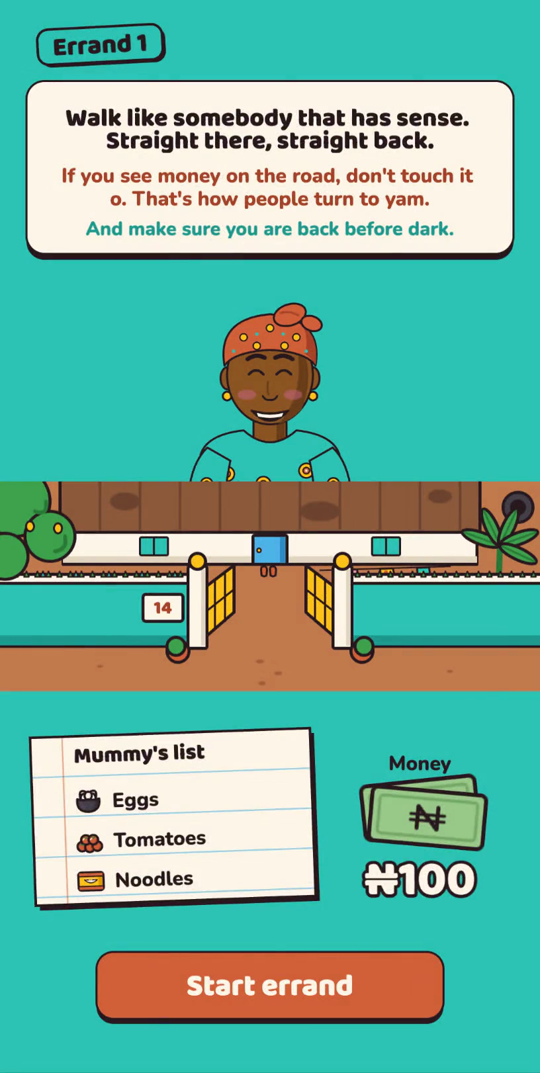
- Mummy's briefing. Her list, the money, and a warning about what is out there.
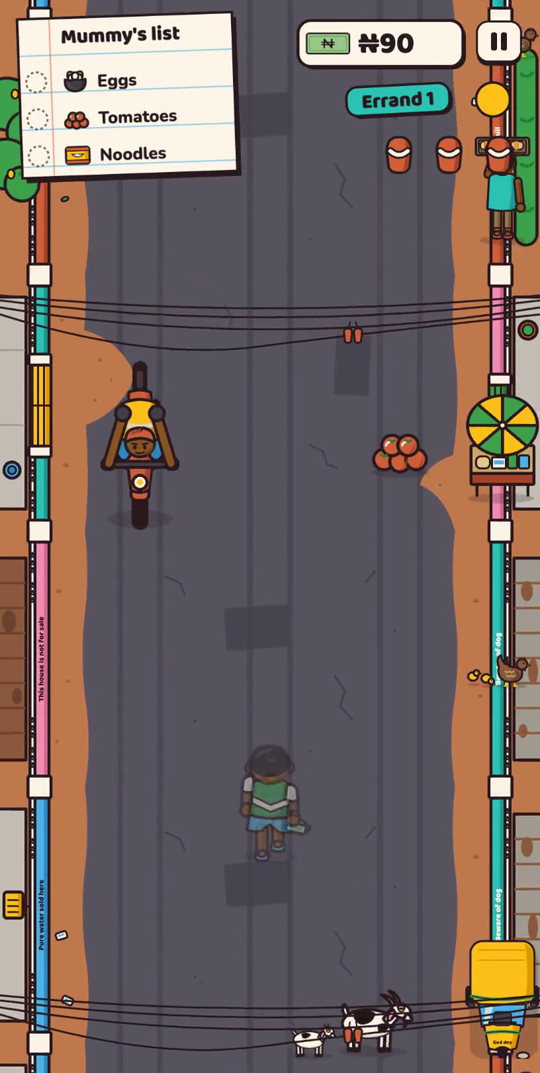
- The way there. Buy what is on the list while okadas, gutters and hawkers get in the way.
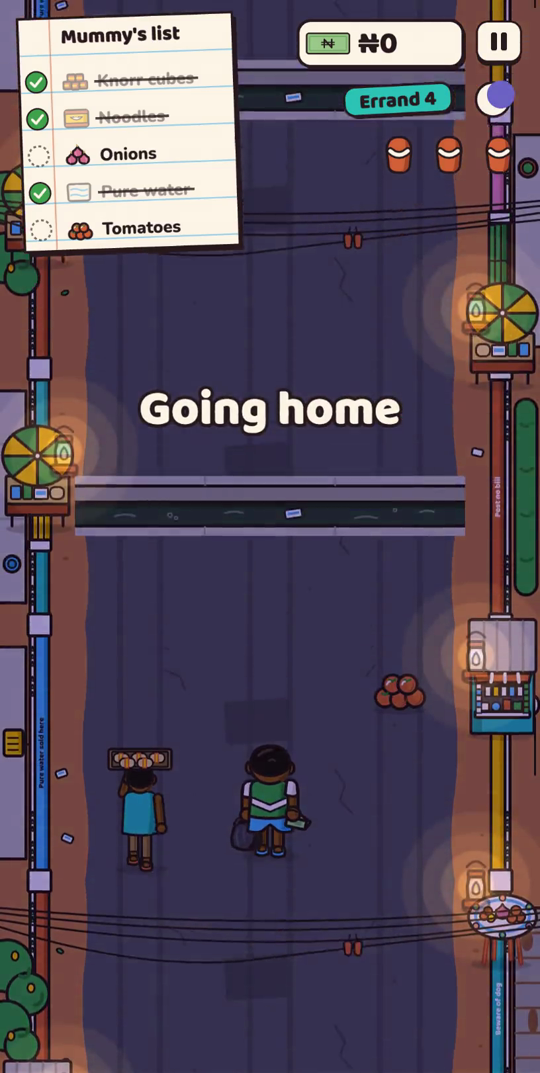
- Going home. The light drops and the street changes.
- The name call. Somebody calls your name. Mummy said don't look back.
- Mummy's patience. Touch money on the road and you turn to yam. Three strikes and Mummy comes to find you.
Type
Mobile browser game
Capabilities
Stack
Key features
Overview
Every Nigerian child has run this errand, with the money in their fist and Mummy waiting at the gate.
Where Is My Change? turns that errand into an endless runner for the phone. Players run a Lagos street buying what is on Mummy’s list, dodging okadas, gutters and the hawkers who share the road, then head home as it gets dark.
Mummy warns them before they leave. On the road, the urban legends she warned about come out. Money that turns you into a yam, a stranger with a handkerchief, a masquerade giving chase and a voice calling your name. Break her rules and her patience runs out.
Why it was built
Mowa Lab tests new ways to carry culture and ideas. This experiment asks whether a shared childhood memory and Nigerian folklore can carry a game, and whether players recognise themselves in it enough to start another run without being asked.
Inside the product
The errand
Buy what is on Mummy’s list on the way to the shop, then run home. Each errand is longer, faster and darker than the last.
The legends
Money on the road, the handkerchief man, the masquerade, the name call and the crying bush, each with a rule Mummy warns you about first.
Mummy’s verdict
At the gate she checks the bag and counts the change. Three strikes and she comes to find you, slipper in hand.
How it was built
The game runs in the browser on Phaser 4, TypeScript and Vite, deployed on Cloudflare Pages. The art was designed as flat vector illustration and rigged as cut-out puppets that are animated in code, which keeps every character consistent and easy to change. Sound is generated in code for now, and analytics show how far players get and whether they come back for another run.
Scope
- Developed the game concept from the childhood errand and Nigerian urban legends.
- Designed the loop of errands that get longer and darker as the game goes on.
- Directed the illustration style and the characters of a Lagos street.
- Built the game and its art pipeline for the browser.
- Wrote Mummy's lines in Nigerian English and Pidgin.
Results
- A playable mobile game at play.mowa.work, now in playtesting.
- A test of whether shared folklore and everyday Nigerian life can carry a game.

Next project
Mowa Books →